No Internet, No Screen Time? FCC Weighs Funding Cuts That Reduce School Internet Bills

In San Bernardino County, that’s tens of thousands of dollars every month.
“Those are ongoing, in fact, municipal costs,” he said. “That’s what E-Rate pays for.”
A “healthy” system.
IE-Rate has had a noticeable impact since its inception. It was established by Congress in 1996, when only 14% of schools and libraries had access to the Internet. That number is now close to 100%. The FCC has overseen the program through both Democratic and Republican administrations, so when the agency announced a comprehensive review of the program in late June, some were confused.
“With its knowledge and its measurement, the program is healthy,” Thurston said. “The program does what you need and it’s important.”
Some saw this coming. The Project 2025 plan outlined the federal broadband policy as a goal to reduce the agency’s spending.
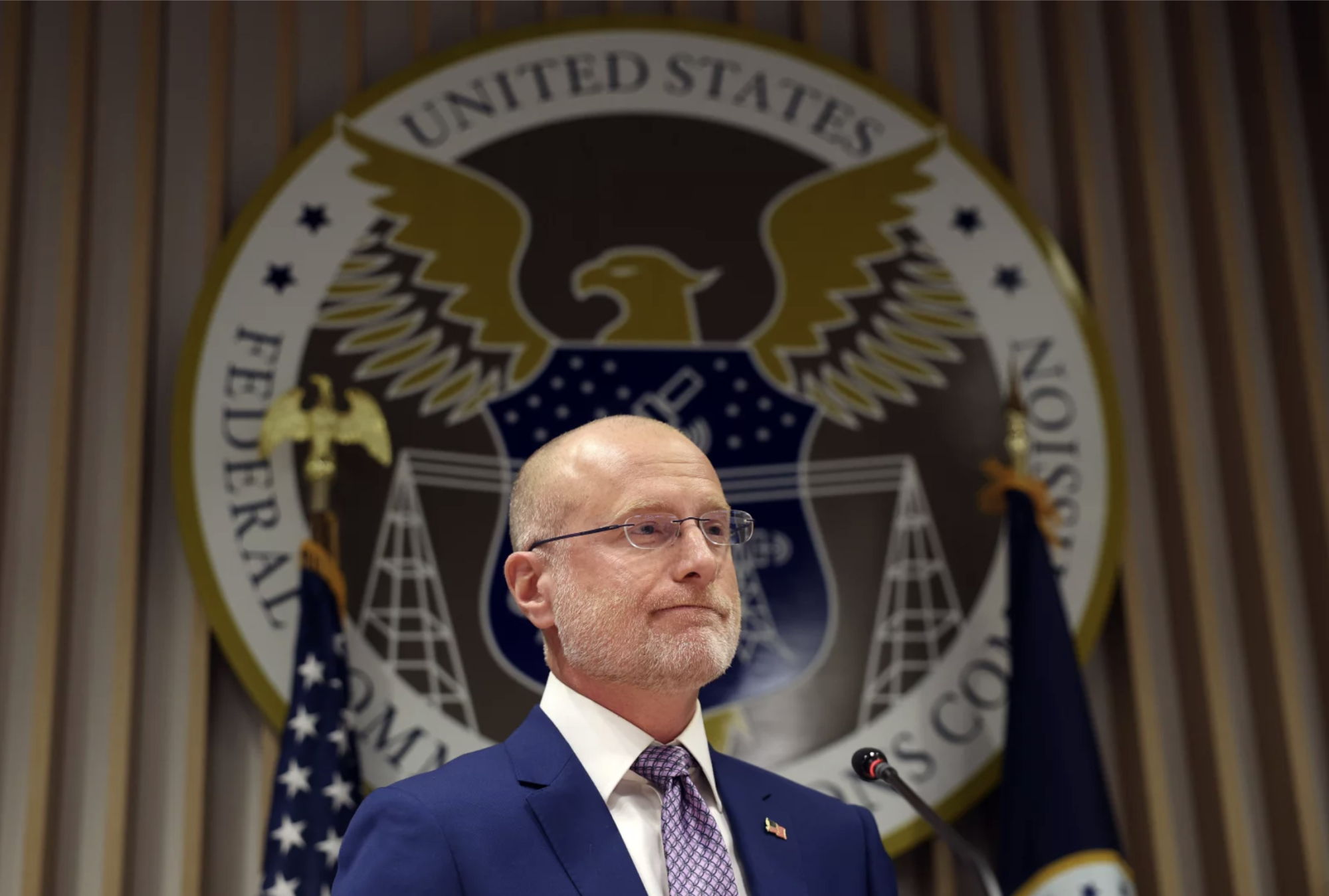
Current FCC Chairman Brendan Carr helped write that chapter of the document, compiled by the conservative Heritage Foundation, which was intended to guide Trump’s second administration.
Less predictable was the chairman’s reason for revising the program: children get too much screen time. In the now-approved notice of proposed rulemaking, the FCC calls for revisions to “better protect children when using E-Rate-supported networks, including limiting screen time.”
His prepared statement at the commission’s June hearing focused more on the dangers of children’s viewing time and the growing body of research surrounding it.
Since January, states including Alabama, Tennessee, Utah and Virginia have passed some form of legislation requiring a review of technology’s role in teaching and testing, and more than 10 other states are considering similar restrictions. The Los Angeles Unified School District, the nation’s second largest, recently approved a policy to limit screen time for its students.
Some advocates of limiting screen time in schools say that removing E-Rate funding is not the way to reduce the time children spend on devices.
“We believe there are ways to strengthen school policies to encourage limited use and protect the privacy of EdTech without removing critical E-Rate funding,” said Josh Golin, executive director at Fairplay, a nonprofit focused on children’s digital safety, in a statement to NPR.
While states and regions are looking for ways to limit screen time, few — if any — want to work without the Internet entirely. Many schools rely on Internet-based systems to track school attendance, monitor school bus routes and administer state-required tests. According to the National Center for Education Statistics, 48 states now have some form of online component and tests.
Bob Bocher, CEO of the American Library Association (ALA), says that because the program is written into the Telecommunications Act of 1996, the FCC is unlikely to be able to completely eliminate it. And last year, the Supreme Court ruled that the Universal Service Fund, which collects money that schools and libraries use to reduce Internet costs, is legal.
But the FCC may change the way the E-Rate program is run to make it more complicated, so ALA remains concerned.
Bocher, who helped work on the original legislation back in the ’90s, worries that the plan could become too onerous and drive schools and libraries away from design.
He says: “It is like death by a thousand cuts with a thousand rules and regulations.”
Keeping up with the rest of the world
Although access to the Internet has grown significantly since 1996, Internet prices and options have not changed the way Bocher or his contemporaries expected.
“It’s a common idea that many people had [was] … competition will emerge,” he says, “and lower the price.”
In cities, this may be true, but in many rural and remote areas, competition among Internet service providers, or ISPs, is non-existent.
“In rural Alaska, we don’t have many options,” said Patrick Mayer, superintendent of the Alaska Gateway School District. “We have one provider.”
His district, where some students rely on airplanes to get to school in the winter months, has fewer than 400 students. Still, the district spends more than half a million dollars a year to ensure Internet access at its six schools. The price tag is high, but the connectivity is what allows them to keep up with the rest of the world.
“It means the difference between having a school in the 21st century,” said Mayer, “or a school in the 20th century.”
Expanding connectivity in her district allows students to take dual-enrollment courses online at a local college and access virtual speech and occupational therapy.
He says: “To return that money, it would be very difficult.”
He thinks there will be no way to cut back on staff and students to get the money to pay all the district’s Internet fees. For now, he’s focused on making noise.
Once the FCC officially publishes notice of its planned review, the public can comment for 60 days. After that, there will be a 30-day comment period for the responses, followed by a full review of all the agency’s submissions. The process could take a long time, but Mayer and other advocates are already working to draw attention to the issue.
He spent several days this month in Washington, DC, to meet with legislators about the importance of keeping Alaska students connected.