Hantavirus is likely to be transmitted from person to person on a cruise ship, says the WHO

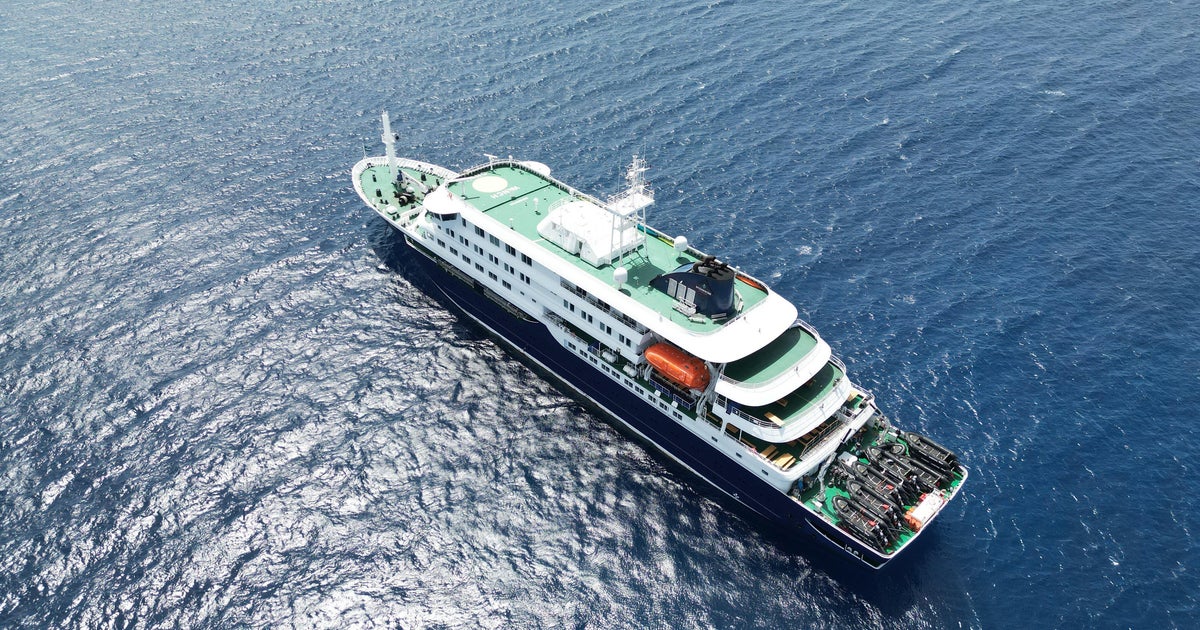
The World Health Organization said on Tuesday it believed it was rare person-to-person transmission hantavirus on a cruise ship in the middle of this diseasethree people have died after falling ill.
“We believe that there may be some person-to-person transmission that occurs between people who are really close [on board],” Maria Van Kerkhove, WHO epidemiologist, said at a press conference on Tuesday. “Husband and wife, people sharing rooms, etc. So, again, our assumption is that it has happened.”
The MV Hondius, a Dutch ship with about 150 people on board, has been waiting for help off the coast of Cape Verde in the Atlantic Ocean after the African island refused to dock due to public health concerns. However, the Spanish government said on Tuesday the ship could sail to the Canary Islands for a “full investigation” and “complete disinfection.”
The WHO also announced in a statement that it has formally requested, in collaboration with the European Union, that Spain contain Hondius in the Canary Islands.
“The European Center for Disease Prevention and Control (ECDC) is conducting a thorough investigation of the ship to determine which people want to leave Cape Verde immediately,” WHO said. “The rest will continue their journey towards the Canary Islands, where they are expected to arrive within three to four days.”
Once it arrives in the Canary Islands, the passengers and crew will be tested before being sent back to their countries, WHO said, noting that Cape Verde “does not have the capacity to do this.”
In addition to the three dead – two of whom died on the boat and the third died shortly after disembarking – there are four other suspected cases of the virus, one of whom is a British national who was removed from the boat and is now in intensive care in South Africa, according to the WHO.
The other three who remain on the ship will first be transported to Cape Verde, and then on to the Netherlands for medical treatment, said the ship’s manager, Oceanwide Expeditions, in a statement on Tuesday.
AFP via Getty Images
Hantavirus is usually spread by contact with rodents or their urine, saliva or feces, but the WHO said that although it is rare, the Andes strain of hantavirus can spread between people. The agency believes the virus was transmitted from one person to another on the stricken ship, which is on a week-long voyage from Argentina to Antarctica and several remote islands in the South Atlantic. When people contract the virus, it has a fatality rate of up to 50%.
Van Kerkhove, director of epidemiology and preparedness and prevention of the WHO, told reporters on Tuesday that the Spanish authorities “said they will receive the ship to do a full investigation, a full investigation of the epidemic, the complete disinfection of the ship and …
Spain’s Ministry of Health told CBS News that its pathologists will examine the ship Tuesday afternoon.
“This intervention aims to assess the condition of the people on board, to find out if there are many people with symptoms, and to identify any people who are at high or low risk,” said the Ministry in a statement. “This will help inform decisions about repatriation procedures and ship routing.”
The passengers face eight weeks of solitary confinement
Ann Lindstrand, the WHO representative in Cape Verde, told CBS News’ Ramy Inocencio on Tuesday that there is no risk of a pandemic threat with hantavirus, given the low chance of person-to-person transmission.
He confirmed that three people would be flown to the Netherlands sometime on Tuesday, adding that the condition of the patients was “reassuring.” They are recovering and stable, having been cared for by Cape Verdean medical teams on board the ship for the past few days, he said.
He said Spanish and Dutch authorities were “discussing a lot” what would happen next to the passengers on board, who were told to stay in their cabins as much as possible.
“If there is a need for quarantine, that will be the decision of the health authorities in Spain or Holland at that time, in close cooperation with WHO advice,” Lindstrand said.
Quarantine, if necessary, can be for two months, since the incubation period for hantavirus is between one and eight weeks, he added, “eight weeks is the longest period of quarantine.” Lindstrand said she was in contact with a volunteer doctor on board who told her passengers they were “really fine,” though they were anxious to know their next port of call.
AFP via Getty Images 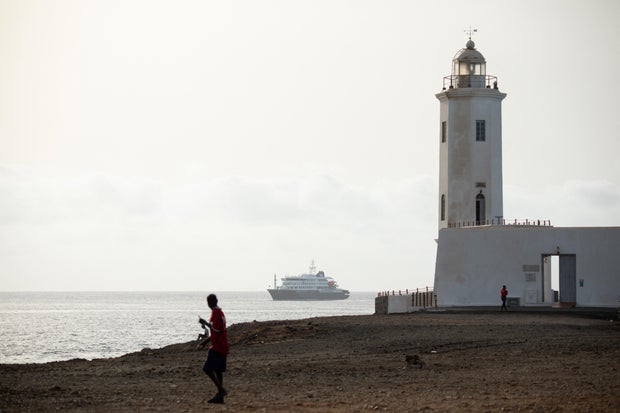
A detailed investigation is ongoing
The WHO said it was working with local authorities and Oceanwide on a “comprehensive assessment of the public health risk.” It was not clear how the outbreak of the disease started.
“Detailed investigations are ongoing, including laboratory tests, and epidemiological investigations,” the WHO said. “Passengers and crew are being provided with medical assistance and support.”
A British man who moved to South Africa on April 27 tested positive for the virus and is in critical condition, authorities said.
A 70-year-old Dutch man died on the ship on April 11, and his wife, 69, died later in South Africa after leaving the ship, officials said. His blood was later found to be infected, said South Africa’s health minister.
The death of the third passenger, a German national, occurred on May 2, according to Oceanwide Expeditions. The victim’s body remains on board, but the cause of death has not been officially confirmed, Oceanwide Expeditions said.
The WHO has also started searching for people who shared the plane with the 69-year-old passenger. The Dutch woman got off the boat with “abdominal symptoms” on April 24 and died two days later, after her condition “worsened on the flight to Johannesburg,” the WHO said. “Communication tracing of passengers on the plane has been initiated,” it added.
Of the remaining 87 passengers, 17 are American, 19 are from the UK and 13 are from Spain, according to Oceanwide Expeditions. Sixty-one crew members were also on board.
The ship left Ushuaia in southern Argentina on April 1, according to Argentine provincial authorities. Health officials there confirmed that none of the passengers had symptoms of hantavirus when the Hondius departed.
But because symptoms can appear eight weeks after exposure, “passengers could have contracted the disease if they found it in the country or elsewhere in the world,” Juan Facundo Petrina, director of epidemiology in Tierra del Fuego state, told the Associated Press in an interview from Ushuaia.
He mentioned that the province had never seen hantavirus cases, but diseases have broken out in other provinces of Argentina, leading to the death of 28 people across the country last year, according to the Ministry of Health.
Oceanwide Expeditions is advertising a 33-night or 43-night “Atlantic Odyssey” cruise aboard the ship. It has 80 cabins, holds 170 passengers, and usually carries a crew of about 70, including a doctor, the company said.