
If AI Works, Why Are 53.3% of EL&D Still Struggling?
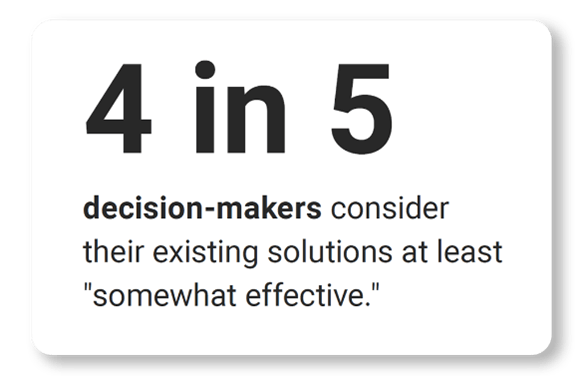
If the car’s dashboard says everything is fine while the check engine light stays on, the problem is not just under the bonnet. The problem is also the dashboard. That’s more or less where corporate L&D finds itself in 2026. In Scheer IMC’s The State of Learning Technologies 2026 report, 53.3% of decision makers say integrating AI or new learning technologies is their biggest challenge. At the same time, four out of five still describe their current learning technology as somewhat effective. Both statements can be true. That’s why this is important.
This is not an argument born of confusion, but an argument born of balance. Many organizations are still testing learning technology with one set of standards while expecting it to deliver another. The dashboard reports on stability, accessibility, and basic usability. Business calls for power, productivity, and proof. Those are not the same conversation.
AI Has Moved From Demo Stage To Delivery Pressure
For a while, AI in business learning lived as a showroom concept vehicle. It looked impressive under the bright lights, attracted confident comments, and rarely survived on a wet Monday morning. That phase is over.
The report makes that clear. AI is now being used continuously in all learning processes in 43.1% of organizations, while another 14.8% say it is fully embedded in all L&D functions. Investments follow the same direction. About 61.4% plan to invest in AI-enabled certification tools, and 60.5% in AI-enabled training tools in the next 12 months.
The appetite is real. The difficulty is real as well.
When AI enters the business environment, it stops being a shiny feature and starts behaving like a new railroad being rolled down into an old city. Suddenly the questions are less about speed and about signals, safety, routes, and who is responsible when something goes wrong. Integration into existing systems, technical complexity, and data security are now areas of conflict. It’s no coincidence that 92.9% of organizations say they have concerns about data security and privacy for AI-based solutions.
The hard part is no longer deciding whether AI is for L&D. The hard part is making it work in a way the business can trust.
“Effective” Carrying Heavy Weight
When four out of five organizations say their learning technology is working, it’s tempting to hear that as a measure of strategic success. That would be a great read.
Most likely, most of the respondents answer the small question.
- Does the system work reliably?
- Can people learn?
- Does it support continuous conflict-free delivery?
- If that’s the standard, then yes, most programs probably work.
But AI has raised the bar.
A learning environment can become stagnant and inefficient, just as a well-planned kitchen can still produce bad food. Beautiful shelves, sharp knives, and organized ingredients do not guarantee that the dinner will help the business achieve its goals. In the same way, a platform can have healthy onboarding, strong student feedback, and smooth administration while still failing a tough test: does it improve performance, close skills gaps, or support change in a measurable way?
This is where the report comes in most. Employee feedback remains the most common way organizations measure learning, used by 55.5%. Yet 44% say the biggest obstacle to measuring L&D ROI is linking learning outcomes to tangible business impact. The problem is not that organizations don’t have data. That most data still behaves like a weather report when leadership is looking for a business forecast.
A Classic Success Story Sounds Comfortable
For years, learning technology has often been viewed as infrastructure. If it was secure, compliant, easy enough to use, and widely accepted, it was doing its job. That logic made sense when the main challenge was digital delivery at scale.
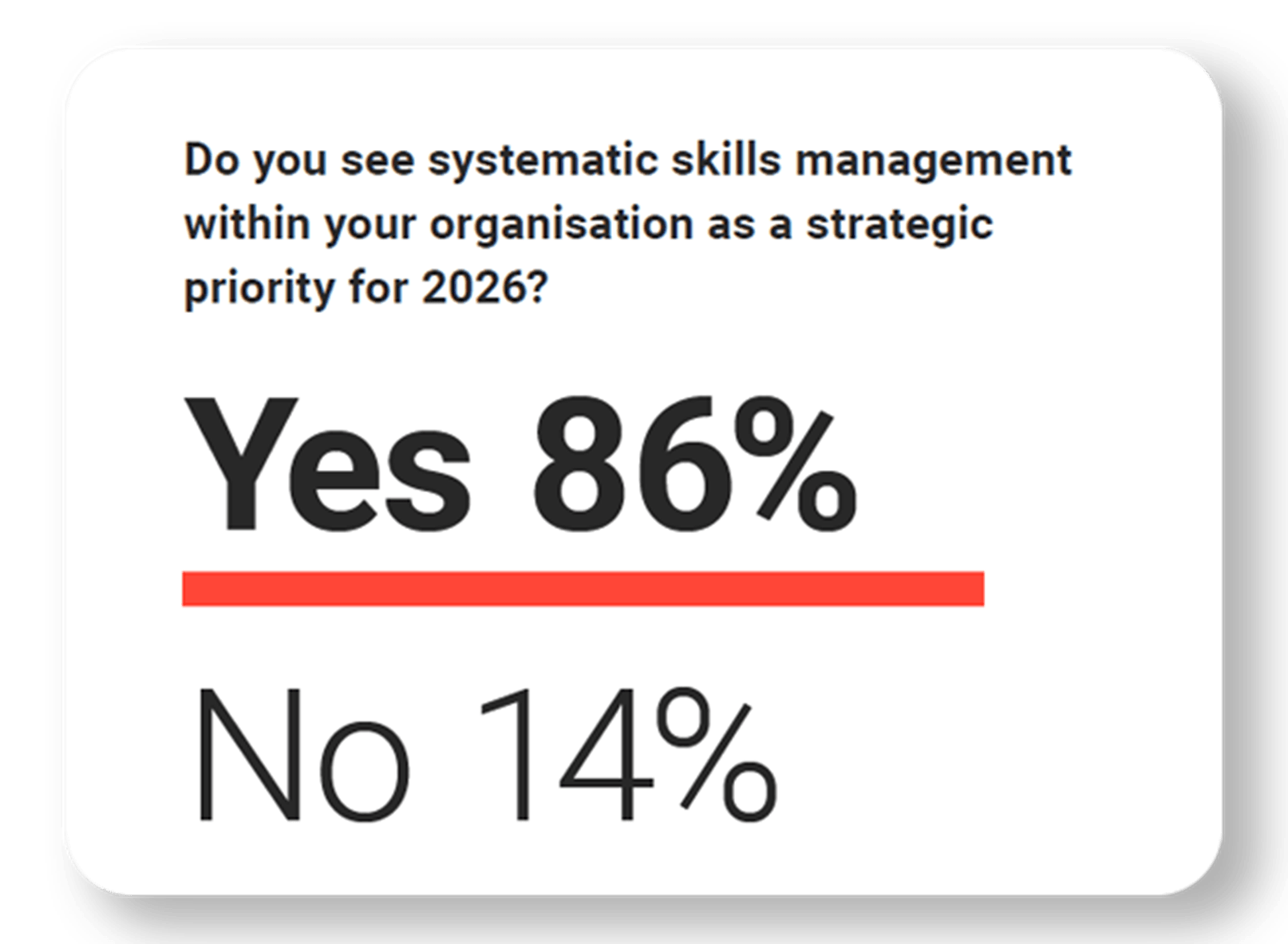
Now short is long. IL&D is called upon to support workforce flexibility, talent visibility, and AI readiness. In the report, 86% of organizations say that strategic talent management is a key strategy for 2026. This is a big change. So is the shape of the learning stack itself. Instead of collecting platforms like kitchen gadgets bought during a late-night shopping spree, 73.1% now rely on a single centralized LMS as the backbone of their L&D ecosystem. This is maturity, but the maturity of buildings. The maturity of measurement is still growing.
Completion rates are still important. Compliance is still important. Satisfaction is still important. But if this remains a topic while the integration of AI and business impact remains unclear, then L&D risks presenting a well-wrapped package with no clear evidence of what’s inside. Work does not have a problem of desire. It has a translation problem.
If Learning Lives on the Job, Measurement Must Follow
One of the clearest findings of the report is that engagement works best when learning is integrated into everyday work. In fact, 85.5% of decision makers say that integrating learning into their daily workflow is the most effective driver of engagement. That should tell us something about moderation.
If learning happens continuously in the workflow, then evidence of impact won’t always be trapped inside the LMS like baggage left around an airport carousel. It should be seen where the work comes from: faster time to know, better decisions, stronger internal flow, or fewer delays in conversion efforts. Not every result needs a whole number. Great leaders know that. What they expect is a reliable line of sight between the learning effort and the business movement.
That line has not been found in many teams. The report shows L&D moving from performance metrics to outcomes such as productivity improvement, skills development, and skills gap analysis. The direction is correct. Killing is harder than aiming.
That’s why the question “What is L&D measurement?” it is very important. It is not a provocative topic for its own sake. It’s a test of strategy. If AI remains difficult to integrate, if capabilities remain difficult to prove, and if business impact remains difficult to connect, then the old definition of “effective” is no longer sufficient.
So What Is Enough?
Full State of Learning Technologies 2026 report it goes deeper into where this gap is most visible, where investment is going next, and why trust, governance, and connected data are becoming the real difference. It draws on the views of more than 420 business L&D decision makers worldwide and is enhanced by the experience of Scheer IMC, which has spent more than 25 years helping organizations address complex learning challenges at scale.
Founded by IT visionary Prof. From Scheer’s flagship university program, the company has supported more than 1,300 organizations and 10 million students through learning platforms, content, and professional strategies. That combination of market insight and practical experience gives the findings more relevance at a time when L&D is under increasing pressure to prove not only performance, but impact. If your reading dashboard looks healthy while the engine still feels uncertain, the general findings should be looked into.