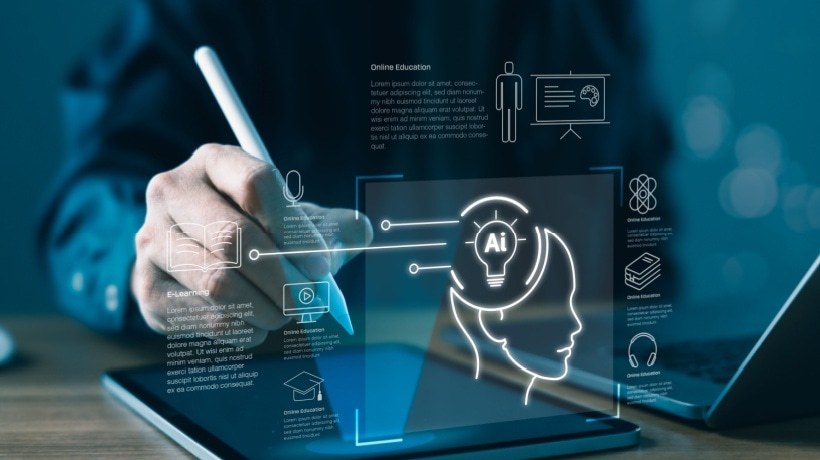
Custom Enterprise eLearning: ROI And AI-powered LMS
In 2026, a global manufacturing leader faced a critical bottleneck: their “off-the-shelf” security training became so commonplace that engagement declined, and minor compliance errors began to rise. By switching to a custom eLearning solution tailored to their specific floor equipment and local safety regulations, they not only saw an increase in completion rates, but saw a 40% decrease in workplace incidents within 6 months. This shift highlights a growing reality in the corporate world: as industries become more specialized and the “skills gap” widens, traditional training is no longer a tool for growth; it is mandatory. Custom eLearning development is the bridge between having employees who “know” and those who “do.”
The Strategic Edge: Why Custom Will Beat Generic by 2026
While “off-the-shelf” content libraries are useful for basic soft skills, they fail to address the nuances of business-specific workflows. Custom eLearning development allows organizations to incorporate their brand identity, unique internal processes, and specific cultural values into the curriculum. In an era where AI in EdTech is rapidly personalizing the User Experience, custom modules can be designed to work seamlessly with AI-driven Learning Management Systems (LMSs). This interaction ensures that the content is not just a static text but a flexible environment that adapts to the specific role of the learner, past performance, and even their preferred learning style, be it video, text, or interactive simulation.
The Lifecycle Of Precision: The Custom Development Process
Building a bespoke learning ecosystem is a disciplined journey from plan to implementation. It begins with a needs analysis, where stakeholders identify functional gaps that need to be filled. This is followed by Instructional Design, where “storyboarding” turns technical data into an engaging narrative. During the development phase, modern enterprises are increasingly using AI-assisted validation tools to create high-fidelity simulations at half the cost of conventional models. The final stages include rigorous quality assurance (QA) and integration into the company’s existing Learning Management System, ensuring that data flows from the course back to the HR dashboard for real-time tracking.
Hard Numbers: Proving the ROI of Custom Learning
The financial argument for custom development often centers on “productivity gains.” According to a study by IBM, every $1 invested in online training results in about $30 in increased productivity, mainly because employees can quickly apply new skills without the time-consuming traditional off-site seminars. Furthermore, a 2025 report from Research.com shows that eLearning can improve retention rates by 25% to 60%, compared to just 8% to 10% in traditional classroom settings. For large businesses, this efficiency translates into millions in saved “knowing time” and reduced employee turnover, as 94% of employees report that they will stay longer with a company that invests in their development.
The AI Revolution: Personalization at Scale
The integration of AI into EdTech has fundamentally changed custom development from static “page turners” to intelligent, responsive environments. In a standard system, every worker follows the same linear path regardless of their existing expertise. However, by using AI-driven Learning Management Systems, businesses can now use “pre-diagnostic testing.” Once an experienced manager has mastered conflict resolution, the AI identifies this and adjusts the course map to skip the introductory material, focusing on high-level simulation. This flexible learning method reduces training fatigue and ensures that high-value employees aren’t wasting billable hours on knowledge they already have.
Microlearning: Personalized Content for the Modern Attention Age
One of the biggest benefits of custom development is the ability to design content into microlearning modules. According to research done by Journal of Applied Psychologyreading in small, bite-sized chunks makes information transfer 17% more efficient than traditional long-form lessons.
- The process
Instead of a single 60-minute lesson, custom developers break up the curriculum into 3- to 5-minute “functional support” chunks. - ROI
Employees can access these specific modules through their mobile devices when they are faced with a problem at work—resulting in the rapid consumption and decay of almost nothing information.
Future-proofing AI-Driven Learning Management Systems
The “delivery engine” is as important as the content itself. Modern Learning Management Systems are no longer just filing cabinets for digitizing PDFs; they are predictive analytics hubs. When you develop custom content, it is tagged with metadata that the LMS reads to track not only completion, but also behavioral ability.
- Mathematical understanding
Data from LinkedIn Learning’s Work Study Report shows that 83% of organizations want to build a more people-centric culture, and the top way they do this is by building data-led capabilities.
Using an AI-driven LMS, a business can predict which departments are at risk of a skills gap before it has an impact on the mind, allowing L&D teams to roll out custom “motivation” modules.
The conclusion
As we navigate the challenges of the technology-driven economy of 2026, the distinction between “training” and “strategic development” has never been clearer. Custom eLearning development, especially when powered by AI-driven Learning Management Systems, gives you a risk-free way to ensure your employees stay up-to-date and compliant. By moving from static, generic content and investing in rich, data-rich learning experiences, businesses can transform their L&D department from a cost center into a powerful ROI engine. The initial investment in custom content pays for itself not only in saved travel costs, but in the output of a balanced, high-performance workforce trained for tomorrow’s challenges.